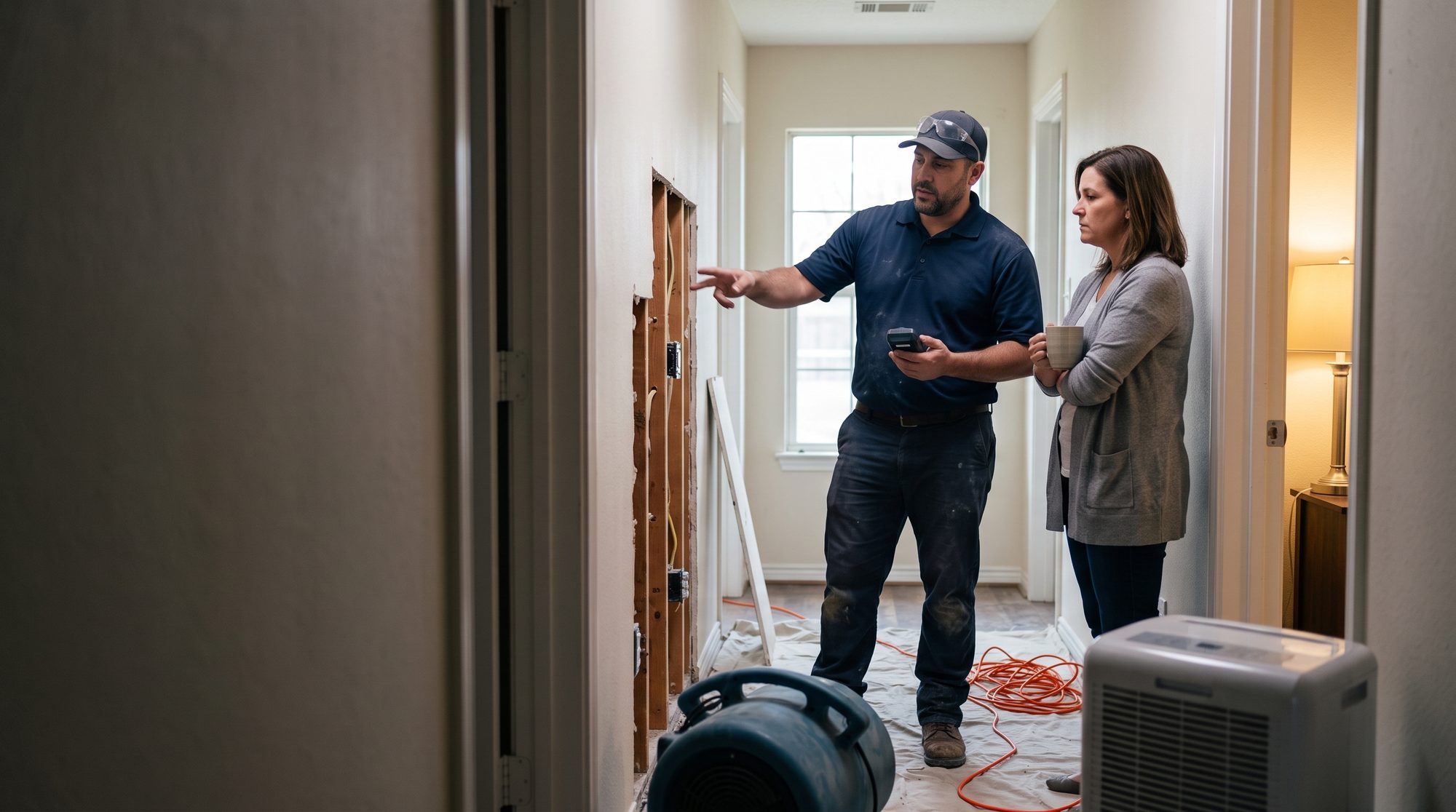
Water Mitigation in San Antonio, in Plain Words
We get the water out and your San Antonio home or building dry, so less has to be torn out, then we put it back together.
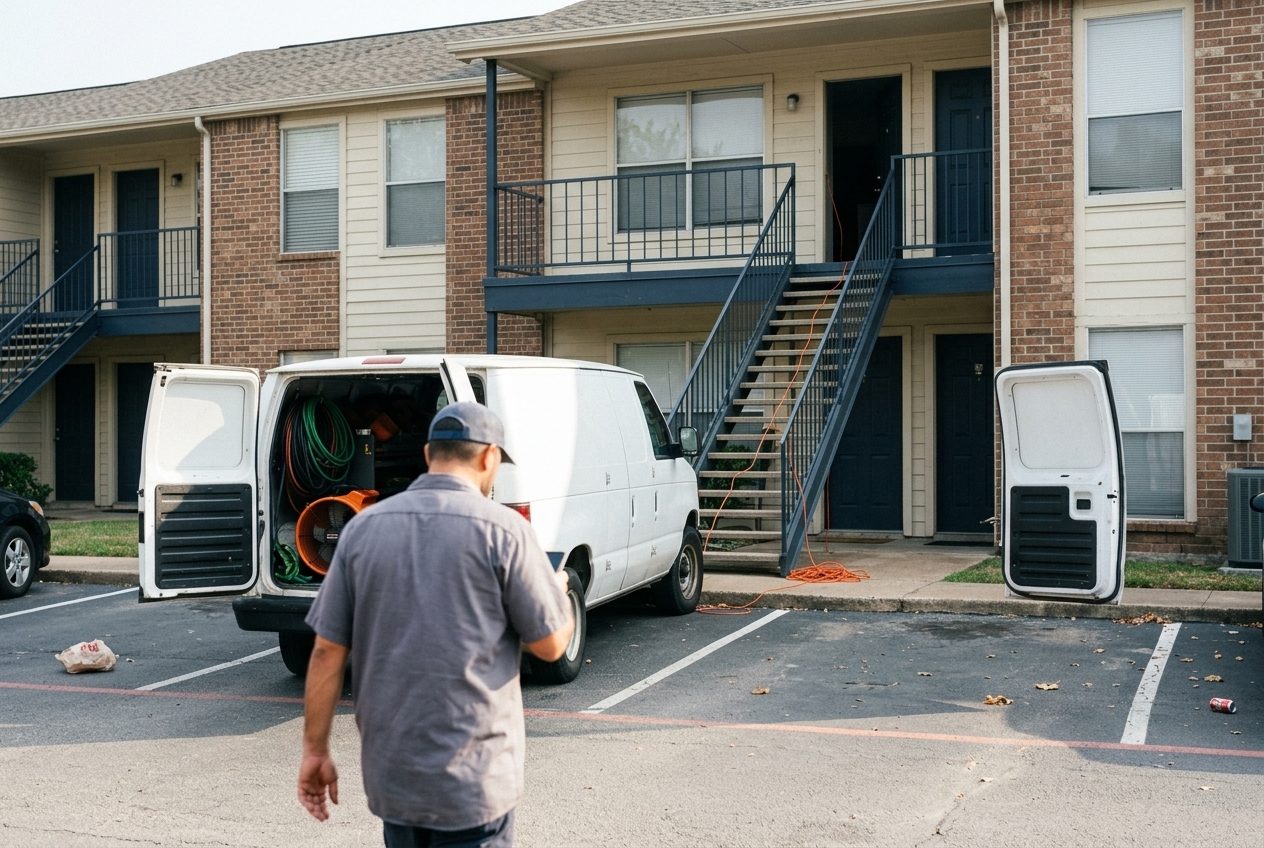
What mitigation means on your claim
Your insurance company splits a water job into two parts. Mitigation is the first: removing the water, taking out wet materials that can't be saved and drying what's left. The rebuild is the second: putting the walls, floors and finishes back. When an adjuster tells you to start mitigation, they mean get the drying going now.
Knowing which part you're in helps you read your adjuster's letters and estimates, so you know what each estimate covers and what comes next.
Why drying starts right away
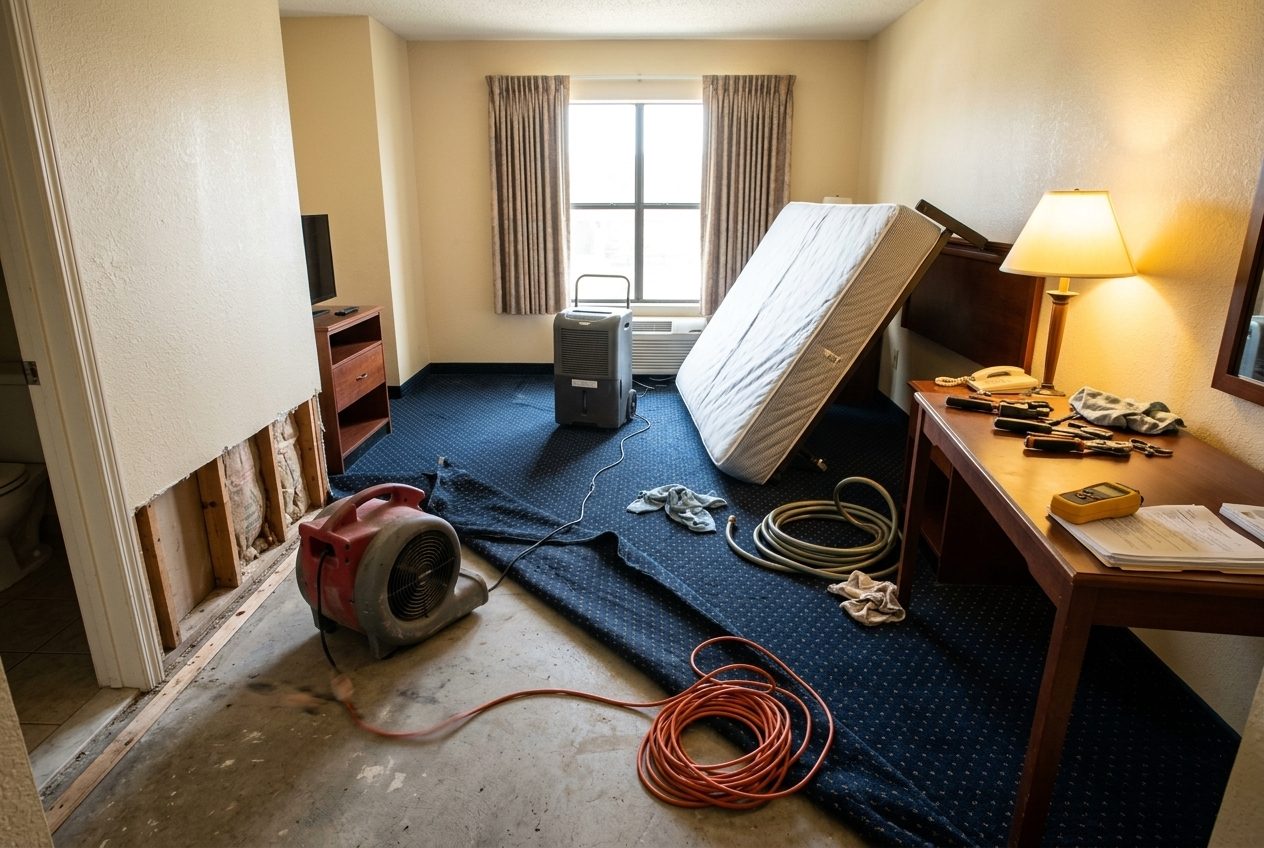
Water keeps spreading after a leak. It climbs up into drywall, soaks deeper into floors and works its way under cabinets. The sooner drying starts, the less of your home has to be torn out. If a wall dries in place, it doesn't have to be cut out and replaced.
Wet carpet pad and drywall left for days can start to smell and grow mold, which is why we get the drying going first.
Mitigation and rebuild on one contract
Some mitigation companies stop once your home is dry, and you're left looking for someone else to put it back. With us, the rebuild is on the same contract, with its own written estimate. You keep one person you can call from the first visit to the final walk-through.
That rebuild puts back the drywall, insulation, floors, trim and paint that came out, so your home feels like yours again.
Questions about water mitigation in San Antonio
Is mitigation covered by insurance?
That depends on your policy and what caused the water. Your adjuster makes that call.
The carpet feels dry. Do I still need mitigation?
Maybe. Water often stays in the pad, the subfloor and the bottom of the walls after the surface dries, and moisture readings tell you for sure.
Is mitigation the same as remediation?
Not quite. Mitigation is about the water and the drying; remediation usually means mold work, which is a separate job.
How do I know when drying is done?
When the moisture readings match a dry part of the house. You see those readings before the rebuild starts.
Who decides what gets torn out?
The moisture readings do. Anything that reads wet and can't dry in place goes on the written estimate before it comes out.
Can I stay home during mitigation?
Often, yes. The drying fans are loud, and rooms where water reached outlets or wiring stay closed until they're dry, for safety.
Has your adjuster told you to start mitigation? Tell us what happened, and we'll start drying.
Tell us what happenedThanks, we got it.
Next step: a person from our team will call you back about what happened.
Have photos? Keep them ready, and your insurance company's name, so we can quote faster.