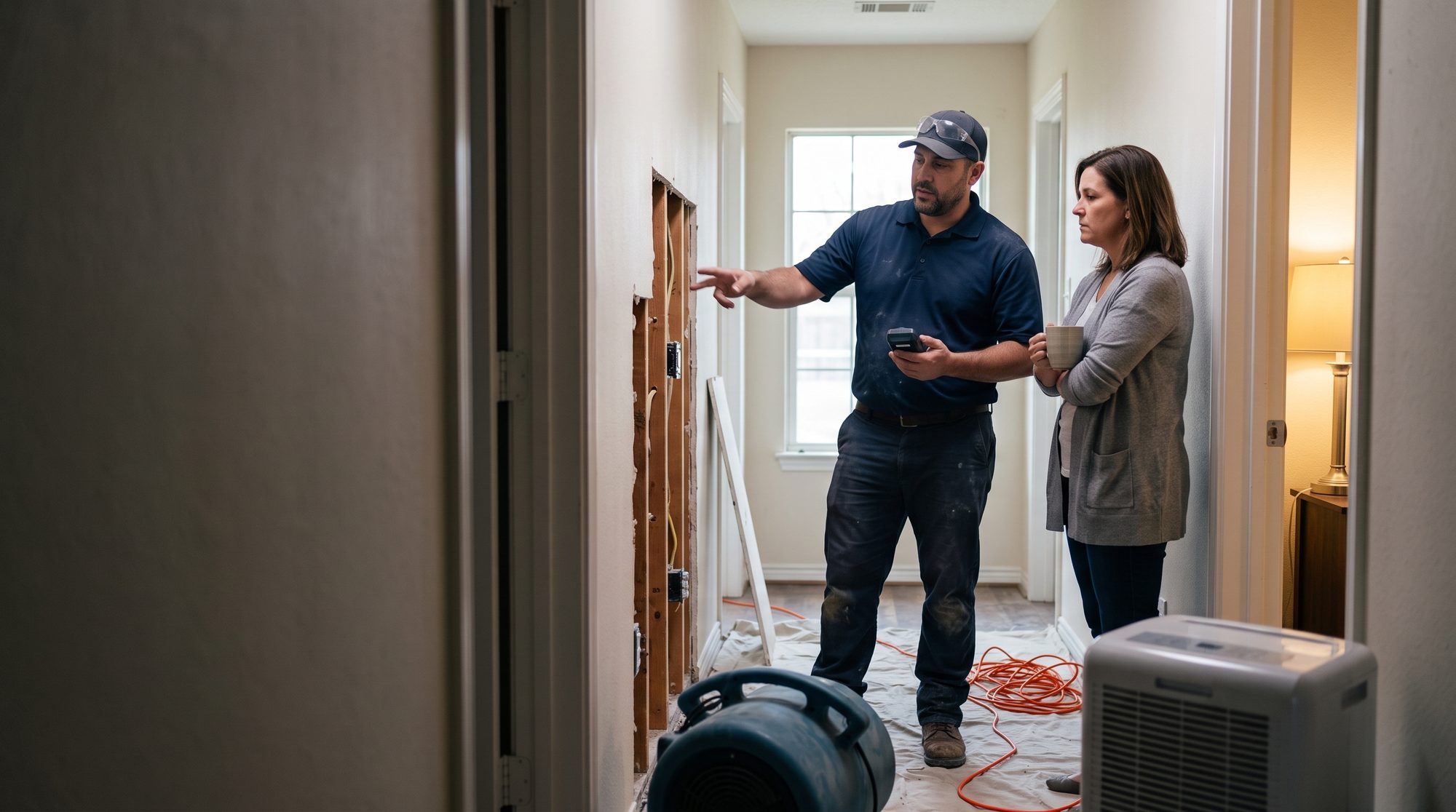
Water Mitigation in Dallas, in Plain Words
We get the water out and your Dallas home or building dry, so less has to be torn out. Then we put it back together on the same contract.
Mitigation, in plain words
Your insurance company splits a water job into two parts. Mitigation comes first: getting the water out, removing wet materials that can't be saved and drying the rest. The rebuild comes second: putting the walls, floors and finishes back. When your adjuster says to start mitigation, they mean get the drying going now.
Once you know which part you're in, their letters make more sense, and we do both parts for you, so one team gets your home dry and back together.
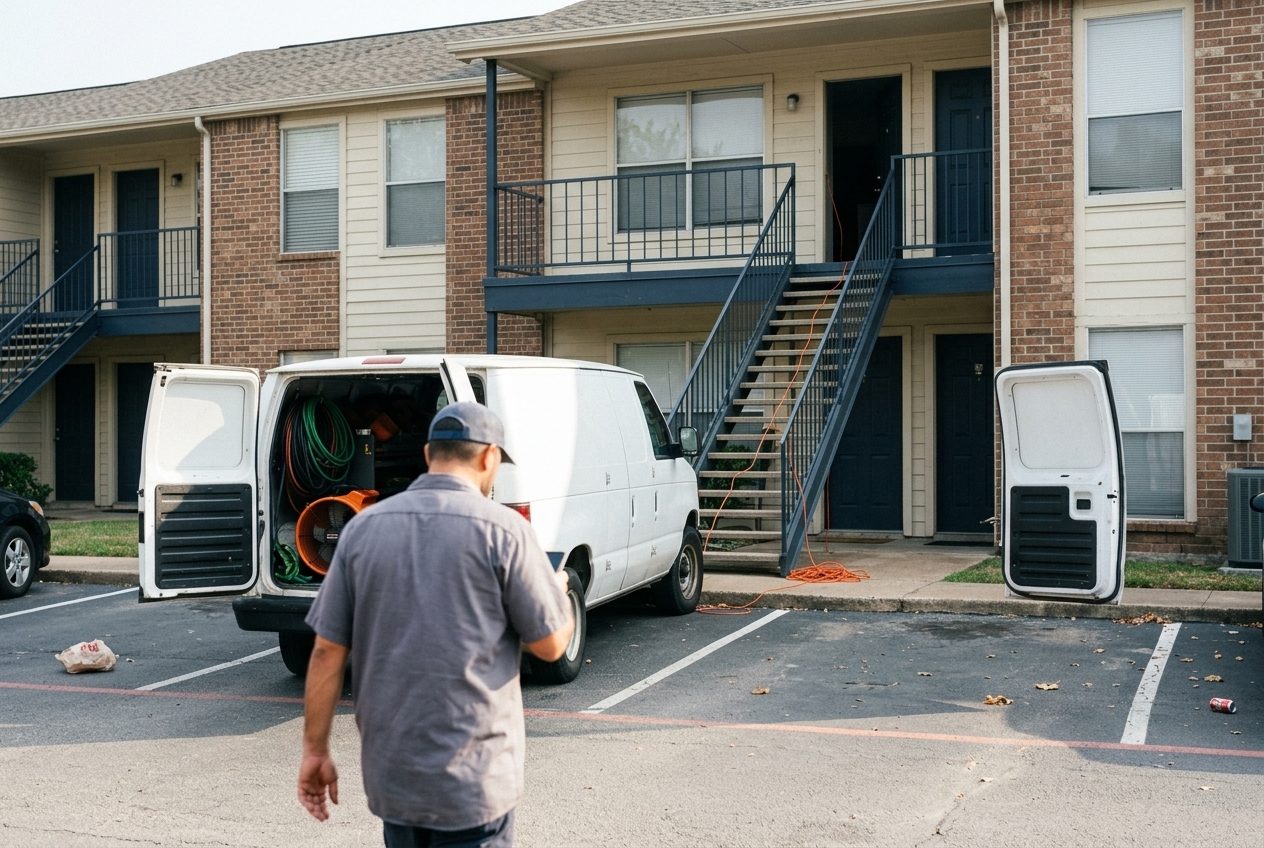
The mitigation work, step by step
Here's what we do during mitigation, so the damage stops spreading:
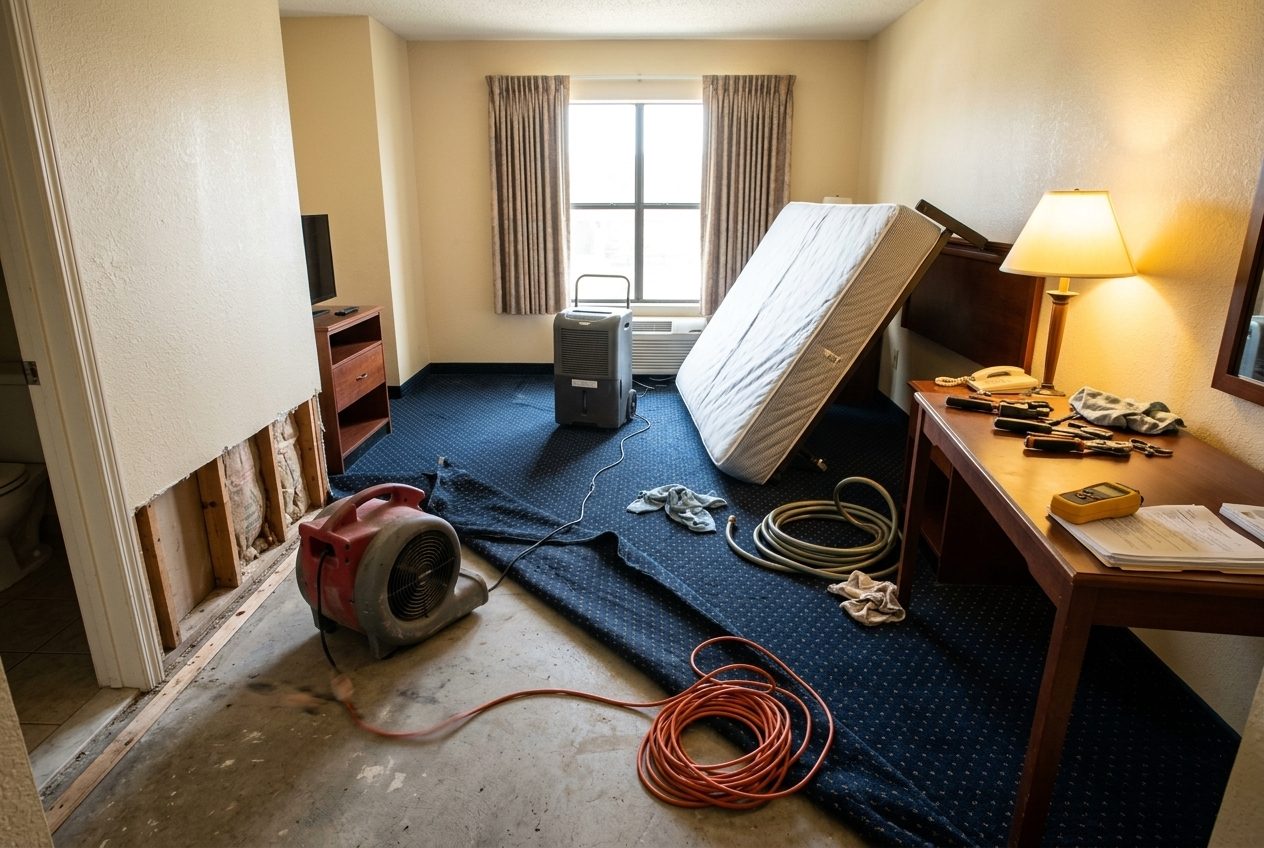
- We move your furniture up off the wet floors so it stops soaking up water.
- We pull the water off the floors and out of the carpet, so it stops soaking into the subfloor and walls.
- We take out only the drywall, insulation and carpet pad that can't be dried.
- We dry the walls and floors and check them until the moisture readings say they're dry.
- We give you photos and notes you can send your insurance company.
- We list each step and its cost in a written estimate you approve first.
Why fast drying means less comes out
Water keeps moving after it gets in. It climbs up into drywall, soaks into the subfloor and spreads under cabinets. Left alone, wet materials stay wet for a long time. Drying equipment speeds that up. A wall that dries in place doesn't have to be cut out.
Wet pad and drywall left for days begin to smell and can grow mold, so we get drying right away and less of your home has to come out.
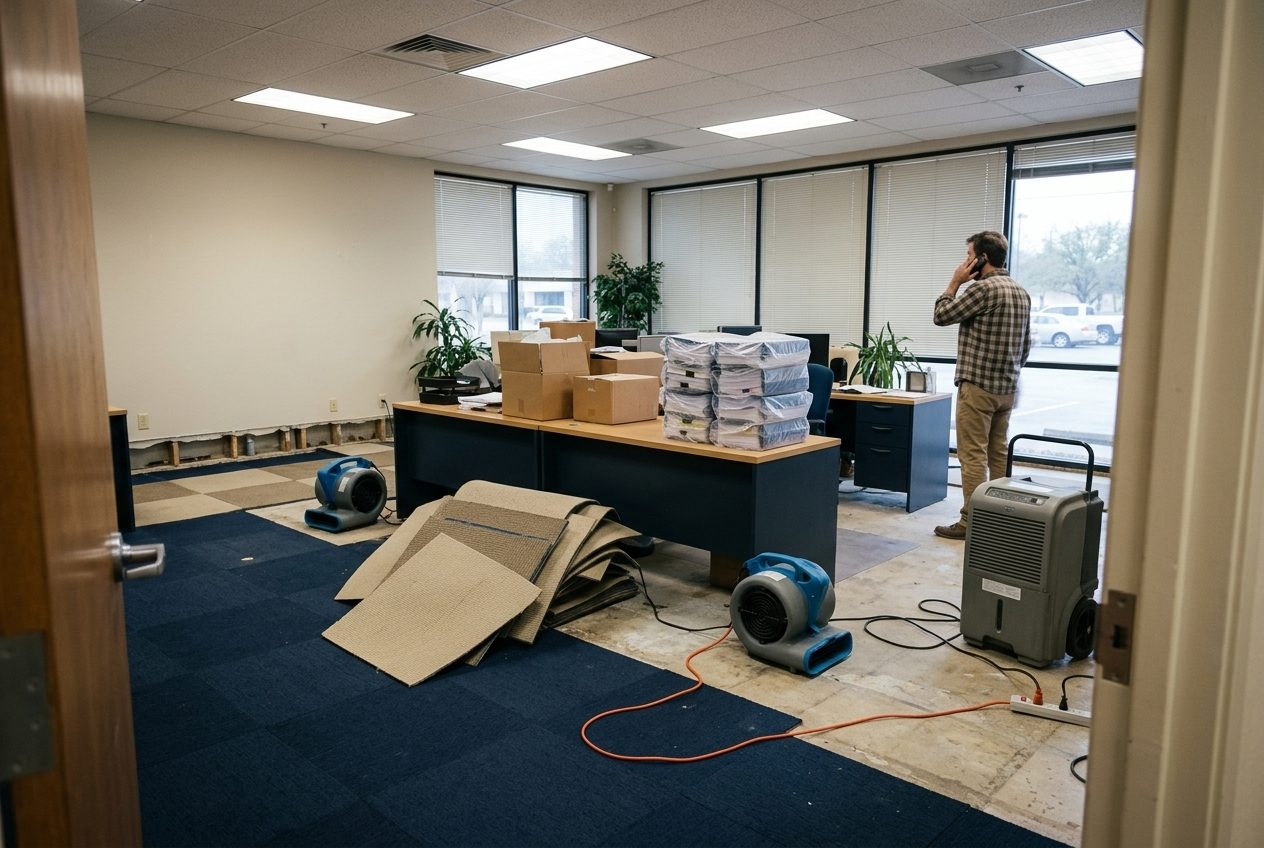
The rebuild follows on the same contract
Some mitigation jobs end when the drying equipment is gone, and you're left looking for a builder. With us, the rebuild is on the same contract, with its own written estimate. We put back the drywall, floors, trim and paint, and you call one person from first visit to final walk-through.
Questions about water mitigation in Dallas-Fort Worth
Is mitigation covered by insurance?
That depends on your policy and what caused the water. We give you photos, notes and a written estimate to send your insurance company, so they have what they need to decide.
The carpet feels dry. Do I still need mitigation?
Maybe. Water often stays in the pad, the subfloor and the bottom of the walls after the surface dries, and moisture readings tell you for sure.
Is mitigation the same as remediation?
Not quite. Mitigation is about the water and the drying; remediation usually means mold work, which is a separate job.
How do I know when drying is done?
When the moisture readings match a dry part of the house. You see those readings before the rebuild starts.
Who decides what gets torn out?
The moisture readings do. Anything that reads wet and can't dry in place goes on the written estimate before it comes out.
Can I stay home during mitigation?
Often, yes. The drying fans are loud, and rooms where water reached outlets or wiring stay closed until they're dry.
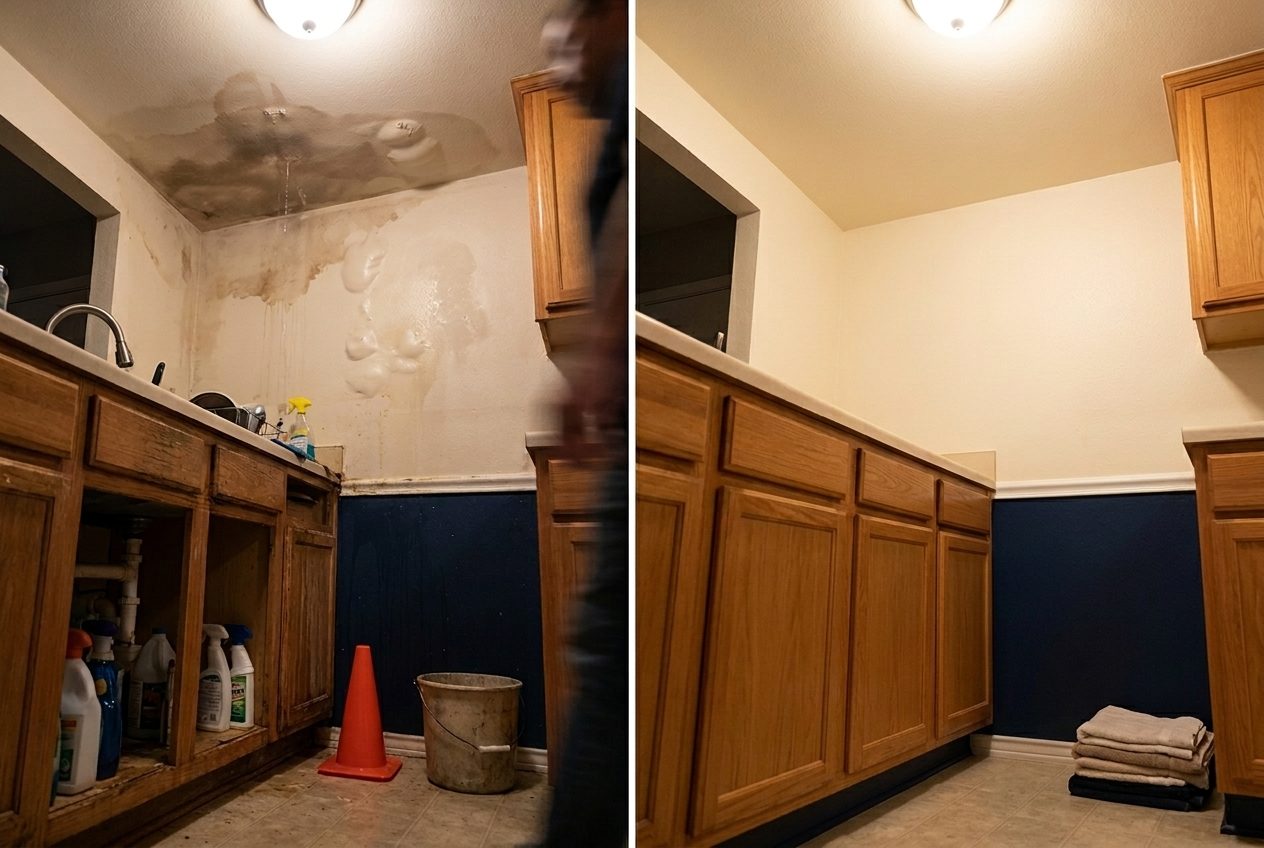
Told to start mitigation? Tell us what happened and we'll get the drying going.
Tell us what happenedThanks, we got it.
Next step: a person from our team will call you back about what happened.
Have photos? Keep them ready, and your insurance company's name, so we can quote faster.